Sunday, June 4, 2023

Pressing Matters


I'm getting some plants ready for a cyanotype workshop with the folks at hcma Architecture and Design in Victoria. First I'm pressing them between sheets of paper towel to get some of the moisture out, then I'm putting them between pages of magazines to squeeze them flat. This is Stoechas lavender and thyme.


It's good to have some heavy books around to add weight to the squeeze.


Cyanotypes works so well with plant details, especially translucent materials like petals. However, it's best to press the plants flat first so the outline with be sharp. You can also lay a piece of plexi or glass on top to help it stay flat, especially if there is a slight breeze.


After you've done an initial pressing you can check the leaves to make sure they are laying the way you want to present them.


The history of cyanotypes is quite fascinating. One of the first uses of the process was to document types of seaweed by Anna Atkins.

If you are on Pinterest, I have been collecting images of different ways they can be used: https://www.pinterest.ca/beespeaker/cyanotype/

I've very excited to have to space and time to create some fabrics with cyanotype prints that can be made into costumes. Stay tuned!


Hungry Eagles and Bees


The invasive Himalayan blackberries are blooming, which means it's time to look for bees carrying that taupe coloured pollen they provide. When you remove invasive plants, it's important to replace them with a collection of the native plants they have likely displaced. So at this time of the year that means hairy honeysuckle, trailing blackberry, oceanspray, sedum and snowberry. At Jack's Point in Nanaimo, these plants will be in full bloom in a few days and there will be a crazy amount of bees on them. There are many worker bumble bees out on Vancouver Island now and a few male bumble bees are also starting to appear. We also witnessed herons and eagles feeding in the bay at low tide.


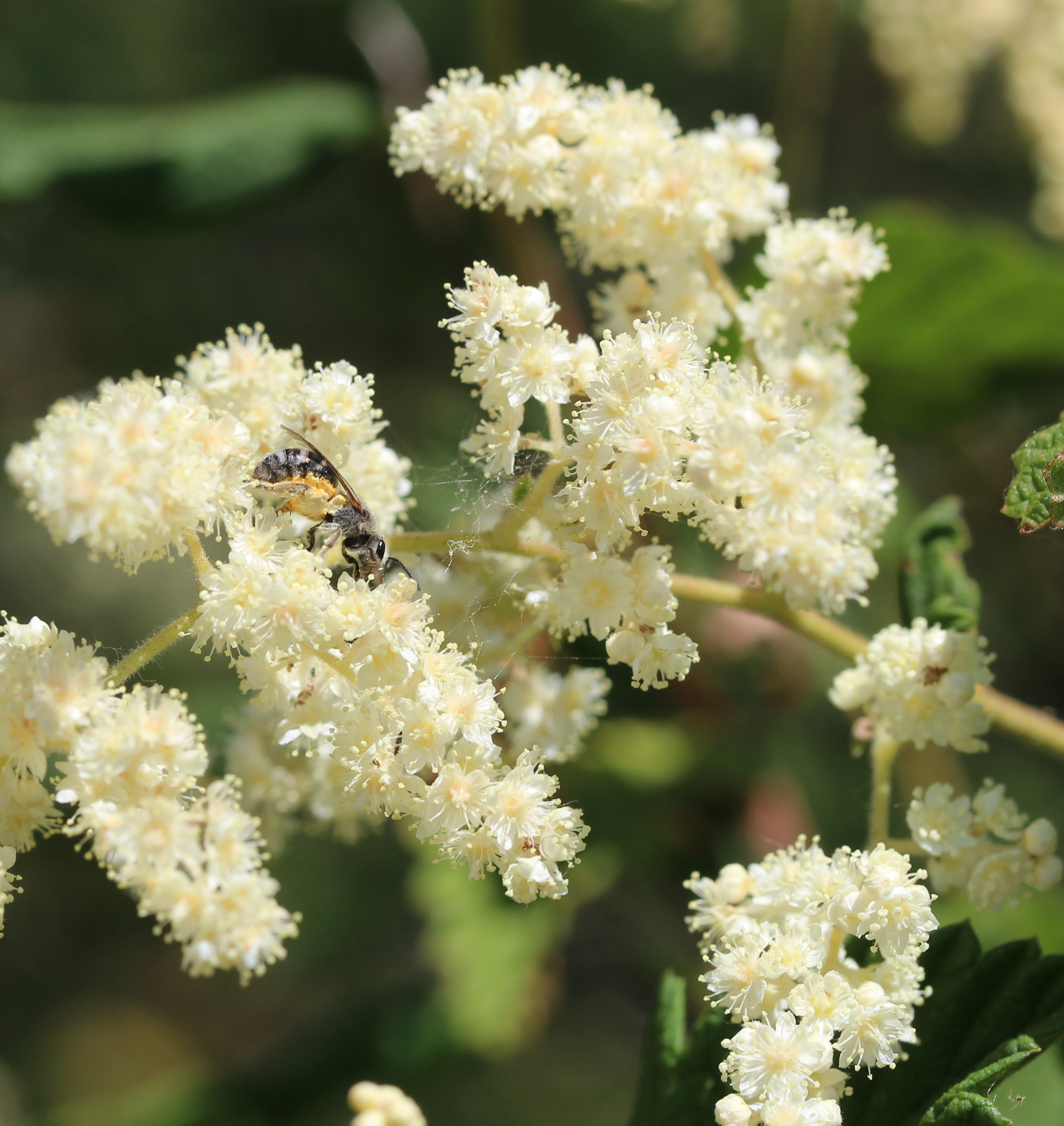
The oceanspray buds and blossoms are frothy and delicate and when fully opened they attract numerous species of native bees. Andrena mining bees seem to love them.


I was happy to see that hairy honeysuckle has an affinity for climbing arbutus trees. This relationship is beautiful to witness. Long-tonged bees, butterflies and moths love suck the nectar from these tubular flowers. Short tongued bees cheat and bite holes in the corollas. I was also excited to see Sedum spathulifolium blooming at the base of some arbutus trees. It makes a fabulous drought tolerant ground cover and bees love the bright yellow flowers.


As the snowberry blossoms appear, the hum of the forest edge increases in volume as all sizes of bees drink the sweet nectar.


This is also a great year for Rocky Mountain clearwing moths which lay their eggs on snowberry shrubs.


There is still a bit of shortspur seablush in bloom, which is also a favourite of Rocky Mountain clearwing moths and bees.

The tiny shiny Ceratina carpenter bees seem  like the right size to feed on these hooker's onions, which are one of the most beautiful allium species I have ever seen.


There were also a few flowers I'm not familiar with--excited to get to know them!

This yarrow was also blooming, with very silvery hairy leaves.


 I was thrilled to see this bee mimic robber fly (Laphria fernaldi). It's difficult to see, but it was carrying another insect as its prey.


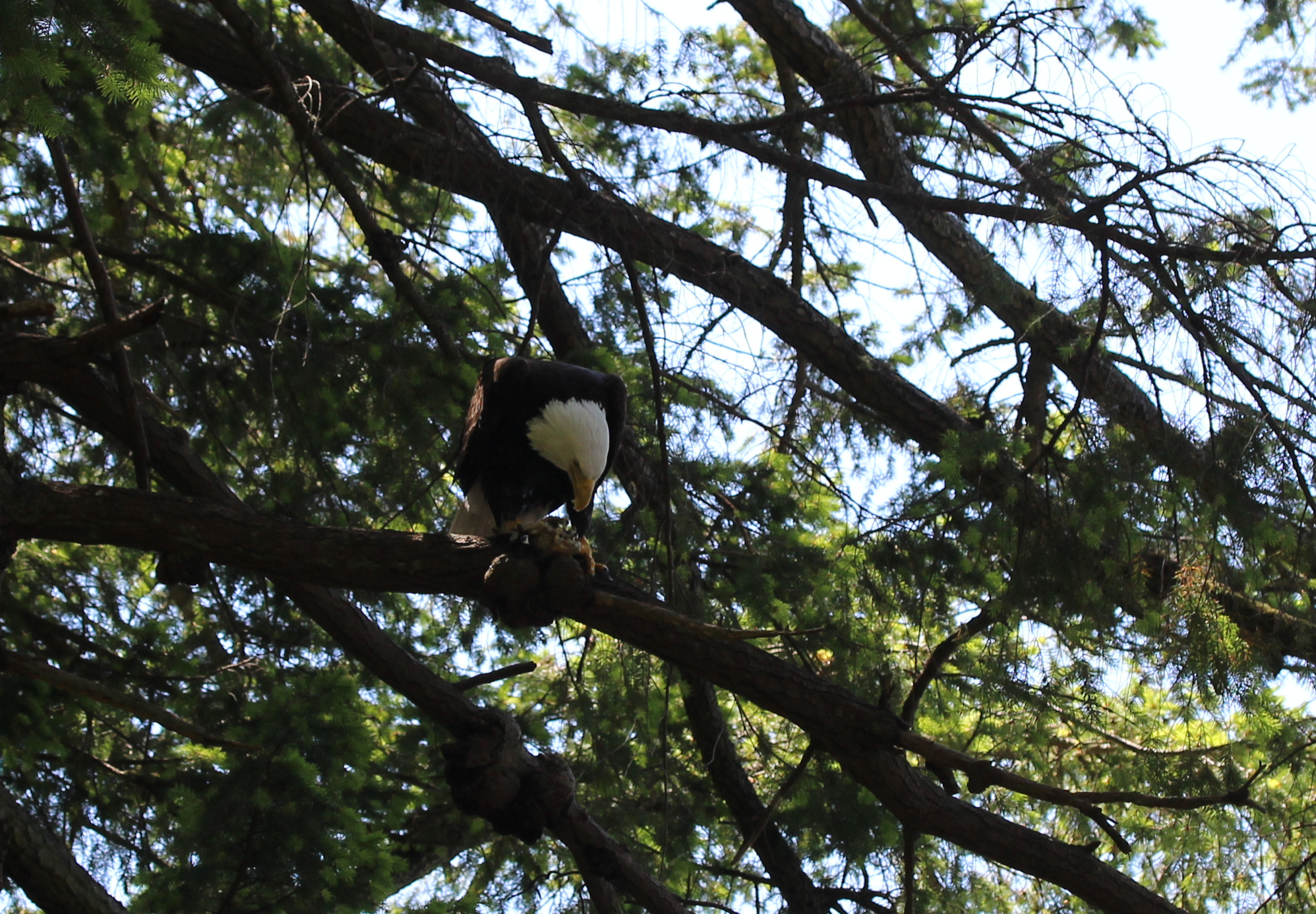
We were really lucky to witness an eagle munching on a large crab. I can attest it was a messy eater! Bits of crab fell onto the forest floor to feed scavengers and add compost to the rich soil.


Darren counted 25 herons feeding in the bay at low tide. It was such a beautiful day to go bee and bird watching at Jack Point. I feel so much gratitude to witness such spectacular beauty.

Thursday, June 1, 2023

Contemplating the Spirea


What a pleasure it was to meet some of the staff at hcma in Victoria and take them on  a tour of the native plant garden at the Royal BC Museum. There are an incredible number of plants here that are great for supporting native bees, including this lovely spirea, which is covered with stamens that the bees love to scramble over to collect pollen.

Here are some resources to learn more about how the garden is structured, and some of the plants it contains. This is an example of how landscape architecture can be regenerative and restorative, putting back some of the plants that were removed when the city was developed. Many of these plants are culturally significant to local First Nations.

https://royalbcmuseum.bc.ca/visit/exhibitions/native-plant-garden


https://staff.royalbcmuseum.bc.ca/2021/04/21/royal-bc-museum-native-plant-garden/


https://royalbcmuseum.bc.ca/sites/default/files/sites/default/files/images/FINAL_Native_Plant_Garden_Brochure.pdf


For more info on native plants that are edible for humans and bees, The Galiano Island Conservancy has created a fabulous set of resources, including a N'uts'a'maat ' foraging guide you can download from their web site.


 Getting outside and watching the bees together was wonderful. I really wish we had more time to do this!


I also assembled a "menditation station" at the hcma office in Bastian Square. The idea is that staff can use these resources to copy the process I am doing with the arbutus leaves made of cloth, or create their own contemplative rituals to deal with climate change anxiety. They can use a quiet corner of the office, or take some materials home.


I also provided some seeds for folks who wanted to grow flowers for bees and some resources on learning more about BC native bees.


I bought some fabric at thrift stores that people can use, or they can bring their own fabrics and even make leaf-shaped patches to mend their own clothes.


There are also art materials you can use to explore the questions: What do you see that needs mending/restoring in your life? What are some steps you can take to heal and mend these things? This is meant to be a playful meditative space to doodle, write, draw, and become grounded in the ideas of restorative design and architecture. Why not create your own "menditation station at home?" Have fun!


Tuesday, May 30, 2023

Worrying About Salal


I have been stitching my way through May and now it’s almost June! As I sew these meandering patterns on silk organza leaves, I work through my worries and my fears. I read an article in Hakai magazine that was written a few years back about the die-off of salal and it really triggered me because I have just seen the bees in the salal on Galiano Island. Some of us who were participants of the 2023 Bioblitz were staying at the Galiano Island Conservancy property. When I emerged from the tent in the morning to take the bleary-eyed journey to the outhouse, I passed clumps of salal criss-crossed with trailing blackberry. These places were buzzing with industrious worker bumble bees collecting pollen for their sisters back at the nest. Losing salal would be catastrophic for west coast bees, especially bumble bees.


I think, worry, fret, and stitch. Then I tie a knot in the end of the thread and leave those concerns behind like a ghost trail of thoughts. I like to start and end the day with meditative stitching. I even found that I could embroider on the bus. (I mean, since you’re sitting on your butt you might as well do something productive, right?!)  As I create a collection of these translucent leaves I also start imagining what item of clothing I can make with them---perhaps a cape and a hat. Maybe I can make a corset and skirt that looks like the bark of an arbutus tree. I was also thinking of stitching fine wires into some of the leaves so I can bend and shape them and give them some body.  That way they can be adjusted and look slightly different every time it is worn.


Tuesday, May 23, 2023

Desire Paths on Fabric


What is a desire path? It’s a concept I will be exploring in depth. The most common way I’ve heard it used is a path that is the shortest point between two distances, often created by foot traffic off the main trail. But that’s a human-centred definition. What about the desire paths of bees, butterflies, caterpillars, beetles, and larvae? There are human-defined roads, paths, and trails, and then there are the ones that nature makes without us. How can we pay attention to the paths of the creatures that were here before us? How can we accommodate them?


I want to explore the concept of “menditation” that Lois Klassen and I first explored in our Slofemist projects. I am inviting you to make your own arbutus leaves out of fabric and stitch your meditative desire trails on the leaves. These can be used to mend an item of clothing or a table cloth, or just used as decorative patches. I found this lovely square of quilting material that is inspired by city maps. It’s fun to contrast the squiggles of a leaf miner over its man-made patterns depicting roads.


There are also desire paths through time. I encourage you to listen to this interview from Emergence Magazine with writer Jenny Odell.

Arbutus Meditation


As we walk the trails in the Harewood Plains in Nanaimo, I find it disturbing that almost all the young arbutus, or pacific madrone trees show signs of a kind of black spot fungus that Brian Starzomski has identified as Phacidiopycnis washingtonensis. Sadly, there are many human-caused factors, including fire suppression, habitat disturbance and climate change that are causing arbutus trees to fail.  Eileen M. Stark has written an excellent article detailing these factors and also giving you tips on how to grow an arbutus tree if they are native to your area. 

Arbutus trees are an exceptional wildlife tree for bees. Honey bees collect nectar from the urn-shaped creamy blossoms, so you can be sure many native bees also rely on them for nectar, including bumble bees.  I’m very excited to go to Galiano this week for the bioblitz to visit a spot near Montague Harbor where there is an arbutus tree with blossoms low enough to the ground to observe the bees. And where there’s nectar, you’ll also find butterflies and hummingbirds, which also feed from the blossoms. At least two butterfly caterpillars also feed on the leaves: the echo blue and brown azure butterflies. Birds also nest in the trees, eat the caterpillars and feed on the berries which give the tree its name “madrone” or “strawberry tree”.


I’m working on a diaphanous cape of arbutus leaf-shaped pieces of silk organza. My plan is to create a series of costume pieces I can wear as I talk to people about the importance of protecting and propagating this key bee tree.


You can help researchers by documenting the bees, birds, and other insects you see in arbutus trees and posting them on iNaturalist. Next time you see a pacific madrone tree, spend some time with it, send it your gratitude. Have a conversation. Give the tree your blessing. And be sure to inhale the scent of the fragrant healing blossoms. Read what Diana Beresford Kroeger has to say about its antiviral and antibiotic properties.


Monday, May 22, 2023

Shell Contemplation


Find an object in your home that gives you a feeling of comfort and really take a close look at it. Examine it from different angles in the light. We all need these touchstones in our environment to keep us calm and grounded. Is there a place in your home and/or workspace that you keep a collection of natural objects that help you connect to your place of strength and hope? When you are out in nature, do you take the time to really appreciate some of the finer details of the beautiful plants, rocks, shells, and patterns around you? Remember to slow down to a snail's pace and contemplate these things fully with your senses.

I particularly love the colour palette of this shell--the pinks, browns and powder blues. I like the way the flesh tones come out against the skin on my hand. I appreciate the textured whorls and ridges I can feel with my fingertips. I like the scale of it in my hand. Its beauty calms and centres me.