Showing posts with label workshops with Madame Beespeaker. Show all posts

Monday, July 22, 2019

Mapping Pollinator Hotspots in the Riley Park Community Garden


What a lovely event we had on a beautiful sunny Saturday with the bees a buzzin' in the community garden. Thanks to everyone who came out and brought such delicious food for the potluck and helps us map the garden! I brought my homemade scones, which I like to to spread with honey or jam and clotted cream.


Before lunch, we had fun looking for bees and wannabees in the garden. I worked with my youngest netter ever---not even three years old. He was so excited about catching bees, which we put into jars for a closer look. But what his favourite thing to do was let the bees go. So I taught him to take the lid off the jar and let the insect fly up and away. This is also a skill! Not many folks can remain calm enough to get the hand of it, but he is gifted. During lunch he kept asking me when we could start "bee-ing" again. So cute! This is my favourite part of what I do--connecting people to nature, especially ones with long lives of exploration ahead of them.

The Hot Spots

# 1  Goldenrod Corner

I made small labels for some of the key pollinator plants that are blooming right now in the garden and we walked around to check which ones were really busy at this time of day (1:30 pm to 3 pm).
Not surprising, the goldenrod on the southeast corner of the garden was probably the hottest spot for pollinator diversity, with many sizes of bees, flies, wasps and beetles in a nectar feeding frenzy. And of course, where there are a lot of insects, there are also those insects that feed on other insects, which is also a part of the healthy biodiversity of the garden.


Eastern bumblebee (Bombus impatiens)


 Long-horned beetle


Sweat Bee


Small Wasp

There are other plants blooming on Goldenrod Corner that help make this a pollinator hotspot: purple coneflower (Echinacea purpurea), Agastache 'Heatwave' and potentilla. Furthermore, there is exposed soil under these plants where the mining bees are making their nests. It's also a warm and sunny spot, making the nectar flow at midday.

#2 Herb Garden

The herb garden and surrounding beds are also a hot spot, even in mid afternoon when they are in dappled shade. The big patch of pearly everlasting attracts small-ground nesting bees and syrphid flies. There were lots of bald-faced hornets hunting for prey on the lovage, and tiny insects on the flowering parsley. The oregano is very popular with many species of bees, including small leafcutter bees. The borage by the shed is popular with honey bees and bumble bees because it pumps our nectar every five minutes! The mint is also a popular one here.


 #3 Pollinator Border (Central Section)

At this time of the day the central section of the Southern Border is sun-warmed and very active with pollinators. Hummingbirds, bumblebees and honeybee are very attracted to many of the flowers here. The popular plants at this time of the year are the bee balms (Monarda), cat mint (Nepeta), anise hyssop (Agastache foeniculum), tall verbena, fennel, sea holly, sedums, Balkan sage,  and white buddleja. The Persian cat mint on the corner of the beach garden also attracts many honey and bumblebees.


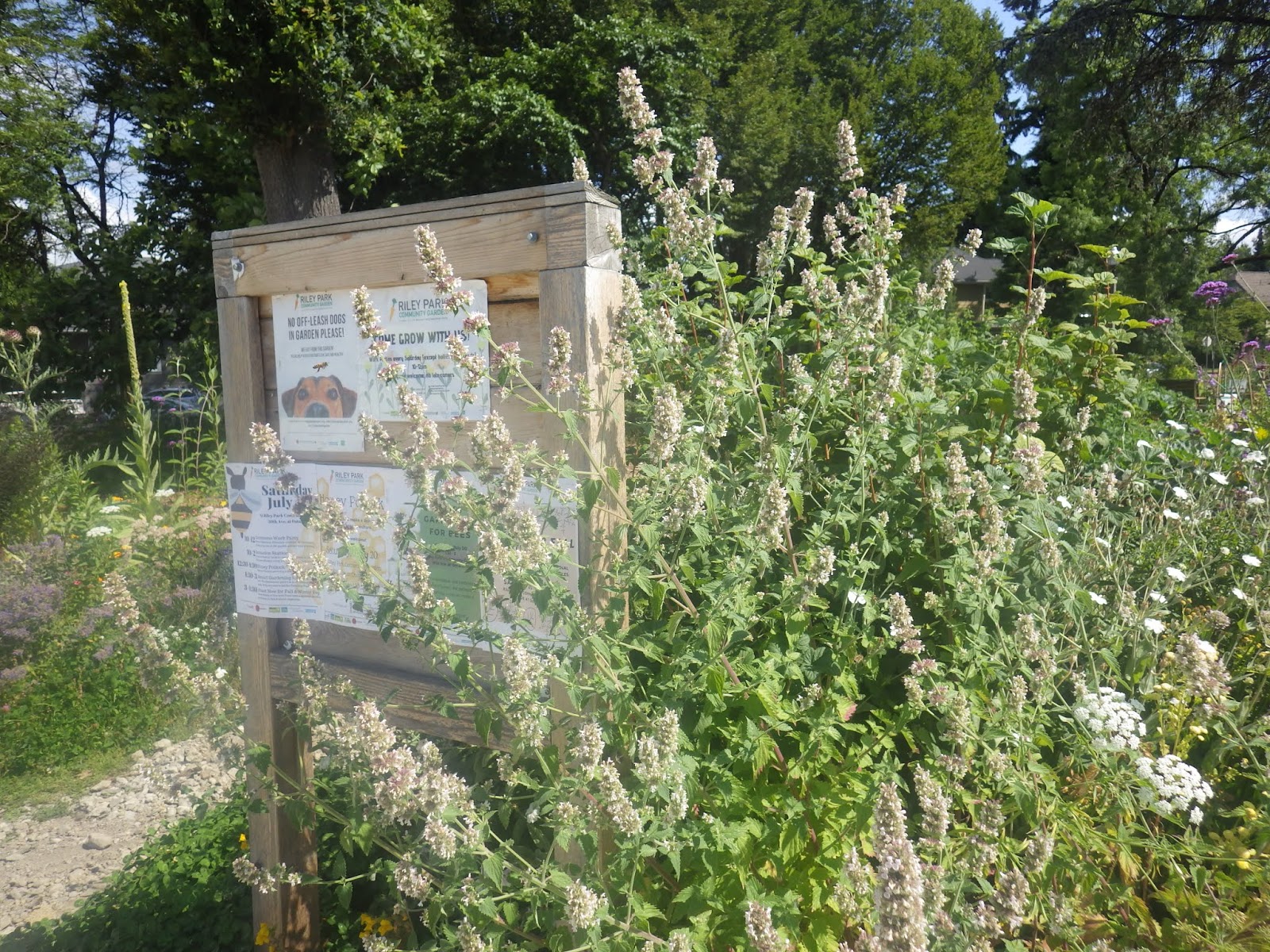


The east end of the pollinator border has persicaria, joe pye weed and snowberry, which are very important pollinator plants for this time of year.


#4 Three Sisters Bed

Bumblebees and hummingbirds love the scarlet runner beans and honeybees and bumblebees love the sunflowers and squash blossoms. A higher number of sunflowers would make this garden more attractive to many species of bees. They are heavy feeders and take lots of nutrients out of the soil. However, they do remediate the soil, taking out toxins.


#5 Medicine Wheel Garden

There are many great pollinator plants in this bed. The persicaria, fireweed, and yarrow are blooming now.


#6 The Espaliered Orchard

There is an eclectic mix of plants here that are blooming while the fruits are forming. The zinnias are and swamp milkweed are much loved by bees and butterflies. Moroccan toadflax is loved by bees that can stick their tongues right into the floral tubes containing nectar. Alyssum is very important for small species of beneficial wasps, flies and bees.


Closing Notes:

Most of the plants in the native gardens have already bloomed and are now producing fruit! I would love to see some native selfheal (Prunella vulgaris) planted around these wild strawberries, replacing the introduced clover. We also need to add some Coreospis grandiflora, native gumweed to the garden because they are the later-blooming native plants that support a wide variety of pollinators. A native clover called Dalea purpurea would also be a great addition.


Finally, another reminder not to plant frilly double flowers that lack nectar and pollen for pollinators who sleep in the flower and need a little sugar boost to get them out and flying again.

Thanks to everyone who helped make this workshop possible! Let's do this again.

Friday, July 19, 2019

Sleepy Agastache Bee


We had a lovely rain and now the sun is out, and that means the bee buns are out!!!!! I had fun visiting the Riley Park Community Garden in preparation for tomorrow's workshop to see who's been sleeping in the garden. This bumblebee is sleeping in the Agastache 'Heat Wave'.


In the garden, it's planted next to a potentilla plant and Canada goldenrod, which also support many beneficial insects. So this is one of the pollinator hotspots we'll be exploring tomorrow in the garden!


Bees also love to sleep on the flat surface of yarrow. With its tiny florets, it's easy for large or small bees to have a drink of nectar when they wake up and resume working.


The scarlet runner beans were also busy with bees, but this fella decided to sun himself for awhile, resting on a leaf. Putting logs and rocks in sunny spots in your garden helps bees and butterfly charge their "solar batteries" and provide lovely places for humans to take a closer look at the beauty of our native pollinators.

Wednesday, July 17, 2019

Singing the Praises of Midsummer Sedums


It's that time of the year in Vancouver when the midsummer sedums shine. If you have those low-growing drought tolerant ground covers in your garden they will be covered with an amazing variety of bees. You'll likely see more than one species of bumblebee sipping nectar from the small blossoms and using patches of these plants as a highway to travel from one foraging hotspot to another. We have patches of these sedum in the pollinator border and in the fruit tree orchard border where they function very well and look great.


When I took this photo of the ladybug, I didn't even notice there was also a tiny bee foraging in the blossoms too!


 You'll almost always see small leafcutter bees with their furry bellies in these sedum. And where there's a leafcutter bee, there's often cuckoo leafcutter bees alongside them too.


Here's another view of one of the species of tiny bees in the sedum. It's a little sweat bee, with bright yellow "pollen pants".


This yellow-flowering sedum is also attracting leafcutter bees too. Our native Sedum spathulifolium is a lovely choice for a spring-flowering succulent. I also recommend interplanting different varieties of thyme that bloom at slightly different times and attract similar species of bees, creating a positive synergy of bee-supporting habitat. Bees also like to nest in the soil around these plants in the nooks and crannies of the low-growing patchwork. These plants also work well in container gardens.

The taller late-blooming sedums are also an important part of a pollinator garden, supporting late season butterflies and bees. Low maintenance, well-behaved and good food for bees--sedums are something to sing about.

Tuesday, July 16, 2019

Curry for Bees!


Bees surprise me all the time and today I learned that bees love curry! What I mean is, long-horned female bees seem to love the flowers of the curry plant (Helichrysum italicum). This plant is named for its scent, not its actual use in curry dishes. It's native to the Mediterranean where the plant is used in cuisine, but I've never had much luck cooking with it. The scent seems to disappear when the leaves are heated. Apparently it is used in the perfume industry to "fix" scent. The leaves are pretty and silvery and as you can see, the blossoms are a lovely yellow color. And these Melissodes bees were tucking in!


I'd pretty much given up on it as a bee plant, but these ladies proved me wrong and you'll find it in an herb plot at the Riley Park Community Garden.


You can see how the flowers resemble the centres of this thread-leaved coreopsis, another Melissodes fave.


It also looks like these pearly everlasting blossoms, another plant that Melissodes bees love to feed on. Does this mean we'll see the same insects that like these plants on the curry plants as well? We'll have to look for hover flies like this on the curry blossoms.


This wasp is nectaring on the pearly everlasting. Will we also see this species on the curry plant? Tune in on Saturday for the answers to these questions and more!

Salivating for Salvia


 When I was looking for bees in this sage plant, a female Anna's hummingbird swooped in and starting boldly sipping nectar just inches away from me. These birds are on a schedule and they're not going to let some nerdy bee photographer put them off. They have a knack for knowing how long it takes for key plants to refill with nectar and then they make a time table of their garden tours. There are three key plants in the garden I've seen them nectaring on: Monarda didyma, Verbena bonariensis, and this sage (I'll find out which species it is and put the info here). Have you seen the hummers visiting plants in the garden?


And then there's this character, who also loves this sage plant. This is a male European wool carder bee and he is jealously guarding the plant and keeping tabs on "his" females. He likes to perch on nearby plants, including this fading clover blossom.


The female goes in for the nectar and you can see the male hovering above her so no other male gets in and tries to mate with her. Yeah, he's THAT guy. So check out these sage plants at the garden in the pollinator border and see if he attacks any other pollinators that try to get some of that sweet nectar. As an introduced pollinator, does he make it difficult for native pollinators to feed in the garden? What implications might that have in the way we choose plants for this site?


Speaking of nectar, check out those amazing markings on the flower, called nectar guides, that signal the pollinator where the sweet stuff lies. Notice that reddish sheen on the flower? Hummingbirds are often more attracted to red plants than any other colour, but there are many exceptions. Do they somehow perceive the red highlights on this purple and white flower? In any case, they make the flower beautiful to human eyes as well!

Saturday, February 13, 2016

The Richmond Children's Art Festival Rocks!


This week I taught 200 elementary students how to weave at the Richmond Children's Arts Festival. It was very satisfying work and I left feeling very inspired by the experience. My station was outside in a tent. Monday was a gorgeous dry, sunny day, but of course the rest of the week it poured with rain.  Two heat lamps took the edge of the wet, chilly air.


I try to choose as many natural biodegradable materials as possible, and use the opportunity to use up odds and ends of materials and recycle old sweaters and one old moth-eaten feather boa.


 I love seeing the evolving  sense of design and the creative choices the students make.


The balloon art in the atrium is exceptional.


It's very satisfying to see the students use the natural materials I've spent days collecting. As he students work with the materials they inevitable break apart some of the seed pods, which is such a human querk. It's good because it gives them a tactile experience with seeds. "This is my first messy art piece," one girl remarks. My job here is done.


Most of the students had never woven anything before.


I explained how the weaving can be taken apart, cut into small pieces and stuffed into a wire whisk to hang in a tree to provide nesting materials for birds. The alar shape of the weaving is my own twist on paper plate weaving, giving the students a challenge. (With the grade ones we just made a straight perpendicular paper plate loom.) I like using the paper plates because it gives the students lots of room to move their hands inside the weaving and makes room for bulky materials.

There were some interesting comments about the scent of the herbs on the table: lavender, oregano, and fennel. "Smells like Mother Nature," one boy exclaimed. "It stinks!" said another. "That's just how nature smells and it's not gonna change," advised a third student. Another boy loved the scent of the oregano. "That's because it's the herb in your pizza sauce," I explained. He was so excited to make that connection he stuffed his weaving full of oregano.


I explained how we had lots of time for this activity and we were living life in the slow lane. One girl agrees: "No hurries, no worries, as I like to say." Of course, some students tried weaving for about ten minutes and then gave up because it wasn't their thing. Others just didn't want to stop after an hour and a half and I gave them some materials to take home. Weaving is very good for brain development and I would love to see looms in classrooms and seniors centres.

Many thanks to the staff and volunteers for such a well-organized and inspiring children's art festival.