Showing posts with label bee plants. Show all posts

Tuesday, April 1, 2014

Don't Be a Fool: Start Planting Your Bee Flowers and Herbs Today!

 Reading the Charts: what to get planting in April by Madame Beespeaker

The West Coast Seed planting charts are very useful resources, but you've got to know how to read them to organize your planting. Let's have a look at what you can plant on April Fool's Day in Vancouver. I've marked the time-sensitive plants with an asterisk. And don't forget to do a celebratory bee dance in honor of the first day of our frost-free planting zone (fingers crossed). A honeybee landed on my jacket in the street today--a sign that the bees are celebrating the warmer temperatures.

Bee Herbs:

Borage: If you want to plant bee porridge for bees and take advantage of those beautiful edible blue star shaped flowers you can sow some today. Go for it! The sun is shining and in May the bees will be thanking you.

*Catnip: this is just at the juncture between being able to start seeds inside or sow directly into the soil outdoors. I will be doing both because of my slug issues. If you're a plant hunter then find some unusual varieties of catnip for your garden. Catnip is such a persistent bloomer it makes a good gap-filler for succession bee gardening.

Chives: Bees love chive flowers and you have four options: transplant the seedlings you started earlier or purchased in stores, start some inside, or sow direct. Or just buy a big pot of chives in a couple of weeks in the garden store. Also, don't forget to grow or buy garlic chives because they bloom later in the season and they're great in Asian recipes. Let your alliums bloom for bees.

Cilantro: Sow some outside now and then every three weeks until the end of July for continuous bee bloom and beneficial insect action. This is a great plant to integrate into your veggie garden even if you don't like the taste--just let it bolt for the bees!

Fennel: Fennel doesn't really like to be transplanted so you can start sowing it where you will want it to be permanently. Keep in mind it is alleopathic--and needs a little island of its own. Fennel and mint make a great tea for dodgy tummies.

Lavender: You could grow it from seed, if you have the patience of a saint, but why not buy a nice plant or six and put them out for the bees? Put it in a nice warm, sunny corner to release the fragrant oils to attract bees to your garden like a MAGNET.

* Mint: Start any of your mints inside today or sow direct. Think of the mojitos. If there's a junky corner of your garden where nothing grows, try peppermint or lemon balm.

Oregano and Thyme: Start some oregano and thyme inside. Buy some oregano and thyme in May. Do it all. Oregano and thyme are great for all sorts of bees. And oregano oil cures just about everything except existential angst.

Rosemary: Buy plants for the bees. Transplant in May. They are blooming right now and the honeybees love them. Put a sprig in the bathtub with epsom salts to ease aching muscles.

Sage: Start some sages inside: pick ones with small blue or purple blossoms for bees and larges red blossoms for hummingbirds. Give a bundle of dried sage to your favorite beekeeper to use in their smoker. Perennial sages are some of the bees bee plants in town. They are an excellent investment.

Bee Flowers:

Agastache: I've found that these seeds work best treated like wildflowers (sown direct in fall or early spring), but the chart says start inside now, and transplant in May. This is one of Madame Beespeaker's favorite heritage bee plants. You can grow purple agastaches for bees and red/orange agastaches for hummingbirds.

Alyssum: Start some inside today or sow direct in May/June. The annual alyssum is also a great plant to buy lots of little pots to put around your veggie and flower beds as an insectary plant. Perennial alyssum is a good spring bee plant.

Calendula: Sow direct now for blooms that will last until the fall frosts. You can also start these inside now--it's a great flower to plant with young children.

*Cone flowers: Start your echinacea inside today or wait until mid May to direct sow. Keep in mind that they are perennials, so require DEEP PATIENCE. Purchasing these plants is really worth the investment, but gardeners who like a challenge can find native varieties to grow from seed.

Cosmos: Sow direct outside until mid June.

California poppies: Sow direct until the end of May. These can be integrated into vegetable gardens and bumblebees love them.

Marigolds: start inside and/or buy some from the stores to plant as nematodal sentinels around your veggie bed. Don't buy the double varieties. Purchase the pollen!

Poppies: Poppies are popular for their pollen. Sow direct where you want them to appear. They don't like transplanting. The perennial varieties are best for bees and help fill in the "June gap" when suddenly there isn't a lot out there for the bees.

Sunflowers: The chart says sow direct mid April, but I'm starting some inside now. Sunflowers are all-you-can eat buffets for bees. Purchase the pollen--avoid the teddy bear variety and go for heritage sunflowers. Gardeners who like to challenge themselves should look into growing perennial wild sunflowers.

Sweet Peas: Sow direct until the end of May. (Not a bee plant per se, but we all LOVE sweet peas!!!! I have occasionally seen hummingbirds and bumble bees in sweet peas.) Did you know that perennial sweet peas are edible? I've seen bumble bees and leaf-cutter bees in the perennial sweet peas.

Zinnias: Sow direct now until the end of May. Hummingbirds and bees will love them and visit into the late summer. Fall bumblebee queens love zinnias.

Asters: And don't forget to plant asters this year. I'm going to try to grow some from seed, but it's really worth investing in asters because of their long bloom time, their broad appeal for several kinds of native bees and the late season forage when not much else is blooming.

If you follow the link to the West Coast Seeds planting chart you'll see they now have charts for other regions including the Prairies, which is very helpful!

Wednesday, June 12, 2013

My Inaugural Citizen Scientist Survey


First you have to choose a site. It needs to be close to your home and have a diversity of flowering plants. It needs to be one block long. I was having an attack of indecisiveness, but in the end I decided to start with the Mount Pleasant Park and see how it worked out. I was torn between that area and my and my neighbour's gardens. Maybe I'll do them too.


You need to choose a good bee-watching day, preferable between 10 am and 3:30 pm. It had been unsettled all morning, but when the sun finally emerged, I headed down the hill with my zucchini plant and two "Hotlips" salvias. After planting these in the plot, I searched for plants that were busy with bees. Believe it or not, the best plant was the lovage in my garden, with these little adrena mining bees.


Then you have to choose three of the plants and count the bees on each for about 3 1/3 minutes each. This wasp appeared later, when I was documenting the plant visitors with my camera.


You can see the holes chewed in these bleeding heart blossoms by nectar robbers.


 There was no action on these broad bean plants.


We have to evaluate cloud cover, wind, rain and temperature.


One of my other choices was a clump of cranesbill geranium. You can see the bumble bee sticking her tongue right into that nectary.


This is the cranesbill geranium planting I watched.


This is my first nasturtium blossom for the year.


 My final plant was borage, or as I call it, bee porridge.


Can you believe this is common garden sage? It's blossoms and calyxes are so beautiful!


This was my first wooly carder bee sighting of the season. It exhibited bullying behaviour, knocking honeybees away from the blossoms.


The cloud cover returned and I headed home for supper. I've pasted the data below for those who are interested.


Pollinator Citizen Science Data Sheet Environmental Youth Alliance 2013

Name: Lori Weidenhammer Date: Wed., June 12 Time of Day: 4:40 pm

Location: Mount Pleasant Park and Community Garden Temp: 20 C Weather: W1 CC 4 Rain 0

Plant 1: Borago officinalis

Bumblebees: 4
Hairy Belly Bees: 0
Sweat/Mining Bees: 0
Honeybees: 5
Flies: 1 (syrphid)
Other

Pollen: white full loads


Plant 2: Lovage: Levisticum officinale
Bumblebees: 0
Hairy Belly Bees:0
Sweat/mining bees: 4
Honeybees: 2
Flies: 0
Other: 1 Ladybug

Pollen: native bees had mustard yellow pollen loads


Plant 3: Cranesbill Geranium 'Rozanne'? (City Planting)
Bumblebees: 6
Hairy Belly Bees: 0
Sweat/Mining Bees
Honeybees: 7
Other

Pollen: scant load

Notes:

The journey to the site:
The sun had just come out after an overcast and unsettled morning with only about 1 mm rain. I noted a bumble bee in a bleeding heart (cultivar) as I walked to the site. There were also bumble and honey bees in a ceanothus. There are about 3 California lilacs on my eight block walk down the hill. There are also many rugosa in bloom by the sidewalks and in curb and traffic circle plantings. The Bridal Bush (Spiraea) was almost spent, whereas a week ago it was in its prime. There are several mock jasmine in bloom, one with an aphid infestation and many ladybug larvae. The lavender is almost in bloom. Nepeta in bloom. One white syringa in bloom with syrphid flies visiting.


The Mount Pleasant Community Garden Raised Beds:
2 syrphid flies on non-climbing clematis
nasturtiums--no visitors
kale flowers: lots of bumble bees and honey bees
white clover: no action
thyme: nothing
pea blossoms (many): no action
salvia officinalis: honey bees and my first wooly carder bee sighting for the year--aggressive behaviour noted, defending this plant
corn poppies: no action
corn flowers: de nada
cerinthe (blue shrimp plant): bumble bee, lots of pollen
chives: no action
calendula: bumble bee
lots of tagetes: no action
crimson clover: no action
arugula: nothing
alyssum: nothing
Italian parsley: syrphid flies
lima beans: nothing
bleeding hearts: holes observed from nectar robbing


City Plantings:
yellow yarrow: no bees
Salvia (something like Purple Rain?) busy with bumble bees. There are several groupings of this plant in the park, along with the cranesbill geranium and yarrow.
white syringa: honey bees and bumble bees. These three trees are quite new.
curry plant: no action
cream-colored iris in the wet garden: nothing


Wednesday, May 15, 2013

Snacking on Kale Blossoms


 I am happy to announce that Madame Beespeaker is diversifying her portfolio! This year I will be doing projects about hummingbird awareness and will be performing hummingbird interventions--growing plants that attract hummers to community gardens. The first planting day was this week with a class at Simon Fraser Elementary in their school plots at the Mount Pleasant Community Garden. While we planted scarlet runner beans and nasturtiums for the hummingbirds, we snacked on kale  and brussel sprout blossoms.


It was fun to see the look of surprise on the children's faces as they tasted a brassica flower for the first time. "It's really good! I didn't expect to like it, but it's better than broccoli! Can I have some more? What else can I eat? Can I eat this sunflower? I can't stop eating these kale flowers. I'm addicted!" The bees love them too, and we have been surrounded by bumble bees, honey bees and mason bees sipping nectar and collecting pollen as we garden. This project has been sponsored by a Vancouver Foundation Small Neighborhood Grant. Many Thanks!

 Today I tried to get some more folks hooked on kale blossoms at the community kitchen at the Moberly Community Arts Centre. Mohinder gave them a try for the first time. . . .


 The verdict? A very cheeky smile tells me she likes them too.


 We drank chai, ate kale blossoms and sweets and chatted about kale, scarlet runner beans and nasturtiums--a trifecta of healthy foods that are easy to grow in your garden. All three plants have beautiful edible flowers and the hummingbirds love the scarlet bean flowers and the nasturtiums as well. The ladies also wanted some perennials, so I bought them some Monarda didyma plants at the UBC Botanical Garden sale. I put some in the Moberly Herb Garden so we can make tea when the plants are established. Monarda is a trifecta pollinator plant. It is a food plant for some lepidoptera (including some that feed exclusively on Monarda species) as well as forage for bumble bees and hummingbirds. It is an atypical bee plant, in that it is red, which is a color bees see as black. Bumble bees also love scarlet runner beans, and they are also atypical bee plants. Scarlet runner beans, unlike common beans, need to be" tripped" by pollinators, even though they self pollinate.


 I gave tips on planting these hummingbird attractors and also taught them how to protect their garden from slugs, which was a big hit! This project is made possible by The Moberly Community Arts Centre. I look forward to more afternoons in the Moberly Community herb garden with these lovely ladies.

Wednesday, April 3, 2013

The Madame Beespeaker Anise Hyssop Project

Agastache foeniculum at UBC Farm


 As an advocate for Vancouver's pollinators, I would like to encourage you to plant Anise Hyssop (Agastache foeniculum) in your balcony pots, back yard, school or community garden. It is a perennial herb in the mint family with edible purple flowers tasting of sweet licorice, which is why is is often called "Licorice Mint". The leaves can be used fresh or dried to make a delicious calming tisane. Anise hyssop syrup is popular in desserts and cocktails. It has a flavor and scent profile that has been compared to root beer.

Sometimes called the "Honey Wonder Plant," one acre of anise hyssop can support up to 100 honeybee hives. The flowers also attract bumblebees and butterflies. I have grown it in full sun, partial shade and even in small planter boxes. The flower heads dry nicely and retain some of their mauve tinge. You can plant the tiny seeds in the spring or late September, and they germinate best sown close to the surface, barely covered with soil. Anise hyssop can bloom from June through September and if it is planted near your Brassicas, it repels cabbage moths. Agastache foeniculum is native to parts of B.C., Alta., and Sask.

When you grow Anise Hyssop, I encourage you to save the seeds, divide plantings and in turn, pass them on to other gardeners so we can get our city blooming! Large quantities of seed can be bought at Richter's, a Canadian herb company.


Madame Beespeaker's Spring Tonic Licorice Mint Tea
Makes 1 pot
2 tbs dried raspberry leaf
1 tbs dried anise hyssop leaves and dried flowers
1 tbs dried wild bergamot leaves and flowers
1 tbs dried nettles
1 tsp dried elderberries
Pour boiling water over the leaves and let steep for 5 minutes.
This is a calming, balancing, cleansing and healing tea. The elderberry will help your immune system. The anise hyssop is good for your throat and digestion. You could add green black or rooibus tea for more body. Experiment and make it to your own taste. As with any herbal tea, it is medicinal--check with your doctor if you have a medical condition or are currently taking medication before drinking herbal teas.


A native bee naps on the leaf of an anise hyssop plant at UBC Farm

Chicken Sittin'

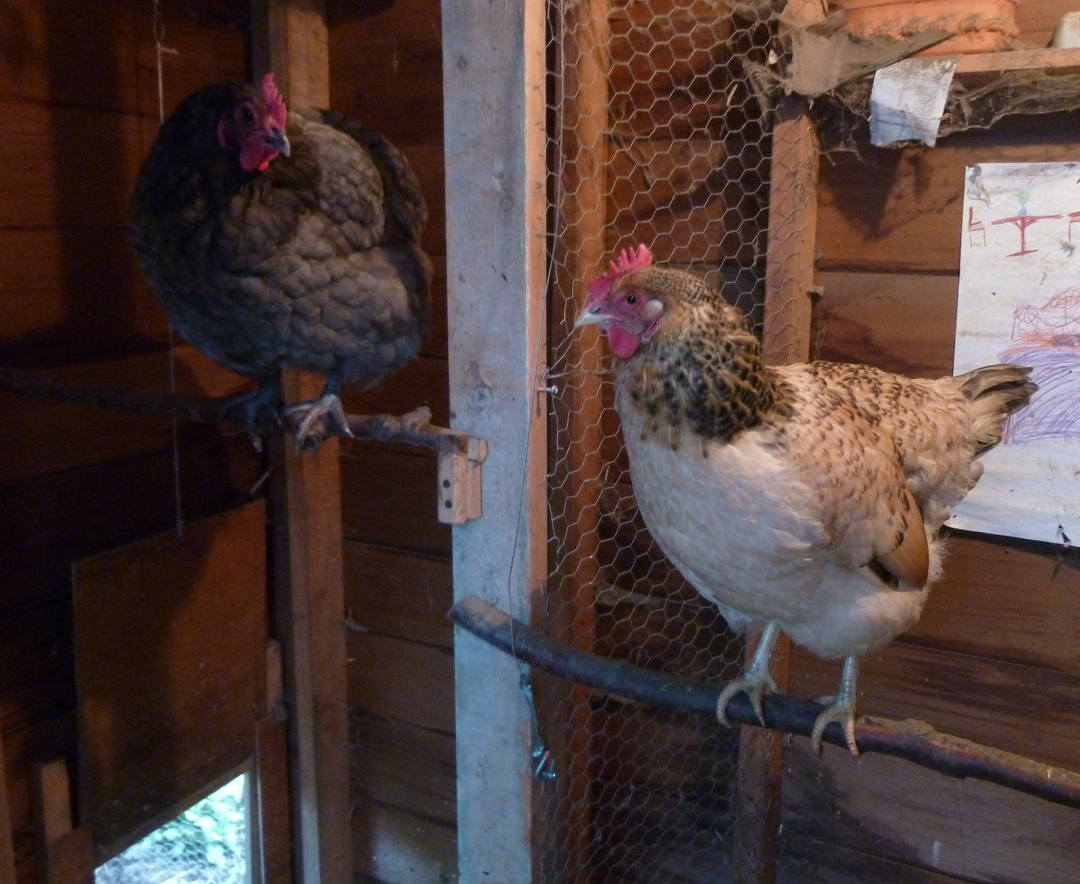
Say hello to Ginger and Mary Anne.

One of the advantages of having neighbors who keep chicken is winning the lottery for chicken sittin' duties. I kept watching the skies last night, waiting for twilight. When I headed for the coop, the hens were already cuddled up inside, with one in classic brooding position. I reached under her soft belly feathers and picked out two warm fresh eggs.


 Then it's time to head inside and feed the cats.

Cat sitter will never find kitteh here.

 I must report I did witness some classic bad kitty behavior, confirming that when you go away, the cats do chew tinfoil, climb the curtains and poop on the floor.


You can tell there's a gardener living here: pea sprouts and eggshells.


As I walked home in the twilight and chatted with a neighbor, the honeyed aroma of the Skimmia japonica wafted between us. The strong scent attracts bees in the cooler weather.