

Showing posts with label bee safari. Show all posts
Showing posts with label bee safari. Show all posts
Tuesday, July 23, 2019

Wednesday, August 17, 2016
Vines Art Festival in Hadden Park

It was my pleasure to lead a bee story safari for the Vines Arts Festival, starting in Hadden Park. I got my first glimpse inside the lovely field hose, with George Rahi giving me the rundown on Publik Secrets and showing me all their cool stuff. I love all the musical organ and bike-related inventions.

We started the tour by talking about the relationship of trees to bees, and I mentioned the mountain ash tree in the first photo above. The beach is quite windy, which presents an energy-draining obstacle for bees, but I was impressed to see intrepid bees in blackberry flowers, Japanese knotweed and morning glory along the paved walking path.

We stopped at this totem pole in front of the Maritime Museum and I was very excited to see this tree poppy (Romneya coulteri) for the first time ever in my life. The stamens are lush with pollen and the scent is beguiling.

It was intriguing that the honeybee we saw was carrying golden brown pollen. Was this the color of the flowers or was this pollen from visiting a previous flower?

Before heading to Vanier park, I stopped by some perennial sweet peas and talked about ground-nesting bees and the problem with neonics. As Vancouver has banned neonics there are likely still nurseries selling plants treated with neonics in Vancouver without any labelling. Then we headed to this patch of ragwort tansy by a pond. The bees, like this Eastern bumblebee, love it but it is a noxious invasive plant.


This is a turquoise sweat bee I saw on the ragwort tansy last week.

In front of the museum we have coleus, prized for its beautiful foliage. However, I was happy to see little black bees, honeybees and bumblebees in the flowers!


The zinnias and brown-eyed Susan flowers in the planters attracted bumblebees and honeybees.


This goose-necked loosestrife at the side of the museum attracted bumblebees and wee bees.


Here's a honeybee collecting pollen from brown-eyed Susans.

This is a sweat bee (Halictus rubicundus) also collecting Rudbeckia pollen. There were also many sand wasps last week.
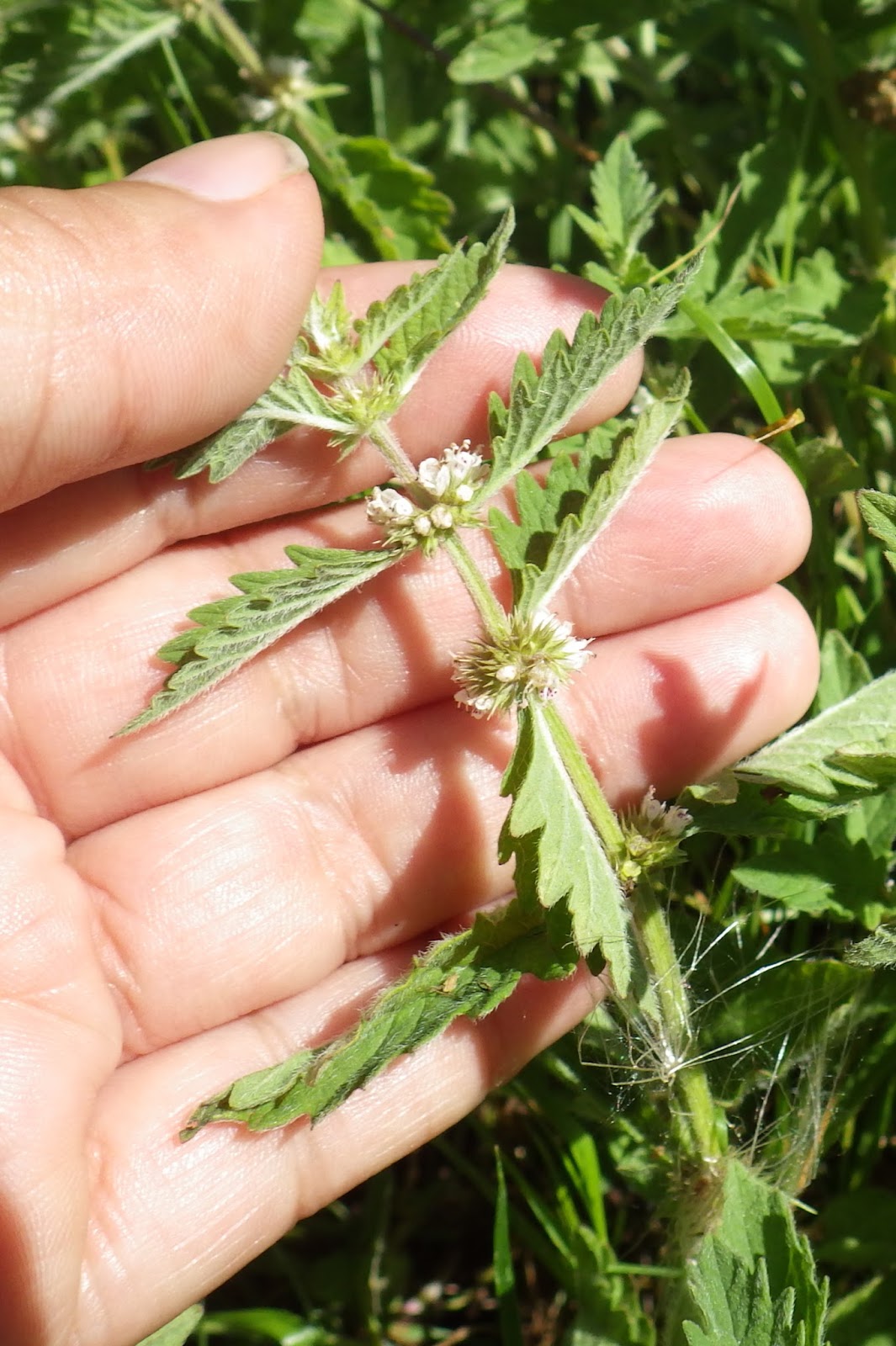
Here's a shot of the mint plant growing around the pond we visited.

Now this is a male bumblebee. Male bees are all about the sperm delivery system. The male bee has a penis that only fits into the female of its species--like a key fitting a lock. Some male bees mate with one female and die (like honeybees). Others mate over and over again with several females (like wool carder bees). Most male bees eat and mate and that's about it. Other males defend their chosen flower patch and male wool carder bees will even attack other male bees and inflict damage with his spikey butt. Charming.

Now this is a cool insect. At first glance, it seems like a yellow jacket. However, I noticed some wierd wing action going on, so took a closer look. This is a fly mimicking a wasp.

See the stubby antennae? That'd be a fly. And look at those big compound eyes!


This Canada goose was also visiting the pond. Modernism meets Canadian feathered fauna.

And speaking of modernism, let's get rid of this bloody useless lawn in front of the Vancouver Academy of Music. It sucks and it's full of goose grease! More native bee gardens please! The Smithsonian has gardens, so why not the Museum of Vancouver?
Please join me on Saturday in Trout Lake Park for more Vines Arts Festival fun!
Monday, August 15, 2016
Bumblebees of Manning Park

Here's a cold, dew-covered bee on the edge of the road in the upper parking lot at the Heather trail in Manning Park. The flower is edible thistle (Cirsium edule). Jasna Guy, my travelling companion, generously allowed me to post some of her photos alongside mine in this blog post. (They are all labelled.) We took turns searching bees on the trail, so I named us bee spotter one and bee spotter two. It was a good system--tag team style bee photography. Jasna received a macro lens recently as a gift, so this was a good place to try it out.

 | |
| PHOTO BY JASNA GUY |
Jasna's photo shows more detail of the abdomen and the back legs, which are important to record to try to ID the bee.

Although not all were in bloom, we saw every one of these wildflowers.

About a third of the bees we saw were very sleepy, like this one on Sitka Valerian.

 | ||
| PHOTO BY JASNA GUY |
Once again, note the leg hairs in Jasna's photo. The color difference between her photos and mine are also interesting! My camera is pushing the yellow.

And this one on Douglas aster.
 | ||
| PHOTO BY JASNA GUY |
Once again, Jasna's lovely photo show the interesting detail of the yellow hairs on the sides of the abdomen.

This little sweetie was there at the beginning of the hike and still here two hours later when we looped back.
 |
| PHOTO BY JASNA GUY |
 | ||
| PHOTO BY JASNA GUY |
Although at first glance it appeared the tip of the abdomen of this bee was black, you can see here in Jasna's photo that some of the blonde hairs have worn off and this bee is likely on its last legs.

Now this was an odd behavior--bumblebees licking spruce needles. We saw this various times on our hike.

The nearby yellow jacket wasps were harassing these bees. I should have taken a closer look to see if there were any aphids or scale insects that may have been producing honeydew.

 |
| PHOTO BY JASNA GUY |
Most of these lousewort families had finished blooming, but this bee alerted us to one of the few remaining flowers. This bee has very sparse hairs on its head.
 |
| PHOTO BY JASNA GUY |
And like many of the bees we saw, this bee lifted its leg as a warning sign for us--feisty wee bees!
Tuesday, June 28, 2016
Taking the Vancouver NatureKids Club on a Bee Safari

I was asked to be a nature mentor and take some Vancouver NatureKids and their caregivers on a bee safari. We met in beautiful Oak Meadows Park at the bee hotel. I started by showing them the small leafcutter bees that were using the tunnels in the hotel as nesting sites and we saw a little bee carrying a piece of leaf into one of the entrances.

It was the perfect day for a bee safari and the flowers were active with bees of all stripes. Before setting out we covered some bee safety tips and I gave everyone a sheet with prompts: twenty things to try to find on our safari.

A flower with pollen that is a color other than yellow or orange: fireweed. Check! Fireweed has green or blue pollen. Look for honeybees, bumblebees and leafcutter bees in fireweed.

And here's a reminder to enter any good bee safari photos you've taken in the EYA's photo contact. There's gonna be prizes!

Another flower with unusual pollen is lacy phacelia or The Bee's Friend. This little bee is rubbing herself along the long stamens to gather the purple pollen. West Coast Seeds sells packages of this flower, calling it purple tansy. There's a really nice photo of a bumblebee right on the package. Whatever it's called, I highly recommend putting it in your garden.

Doesn't she look fierce in flight? Even so, she's a "tickle bee" and cannot sting you! Look at the mandibles she has for digging her nest. She must be some kind of sweat or mining bee, carrying pollen on her legs.

When you're on a bee safari always look in the weeds for bees, especially dandelions and false dandelions. You are likely to see the really wee bees swimming around in the shallow flowers, covering themselves in pollen.

And here's a wool carder bee, resting before nesting in one of these holes where she stuffs wool carded from the nearby wooly lamb's ear plant. I think she's the bee that's sealing the holes with the tiny pebbles you see here. We also saw a hole stuffed with resin--made by another kind of bee or wasp. I even saw a parasitic wasp or ant stuck in the resin--what a cool evolutionary tool!

You often see these little bees on yarrow literally up to their armpits in pollen. Some have yellow leg hairs, making them seem even more neon yellow when they are coated in yarrow pollen.

At the end of the safari we headed over to the entrance of VanDusen Gardens. This planting is an example of one of my favorite native combinations of plants: sedum, blanket flower, nodding onion and Ocean Spray. There were Melissodes digger bees and leafcutter bees here.

This patch of flowers near the entrance of the new building is worth a visit in itself.

And I did see a turquoise sweat bee, even though she proved elusive during our safari.

The sloped soil and stone wall likely provide great sites for ground nesting bees here.
I really enjoyed my afternoon jaunt with the Vancouver NatureKids Club. The adults and kids asked really great questions and they were so appreciative of the work done in Oak Meadows Park to support pollinators thanks to biologist Nick Page and the Environmental Youth Alliance.

As I walked north of VanDusen Gardens to have tea with my inlaws I was rewarded with the sighting of a bee that's rare in Vancouver. In fact, I'd never seen it here before. This was taken in a front yard garden. Too bad my photography skills went on vacay!

I'm pretty sure this in Bombus nevadensis, or the Nevada Bumblebee, a really golden velvety bumblebee queen with a black head and black tip on her tail. How exciting!!!!!
Subscribe to:
Posts (Atom)