Saturday, June 17, 2023

Milkweed Meditation


It's been a privilege to spend some time with showy milkweed in the Okanagan. The morphology of the flowers is stunning and the scent is intoxicating. We know it as a plant that is important for monarch butterflies, but it is also a nectar plant for some native bees.


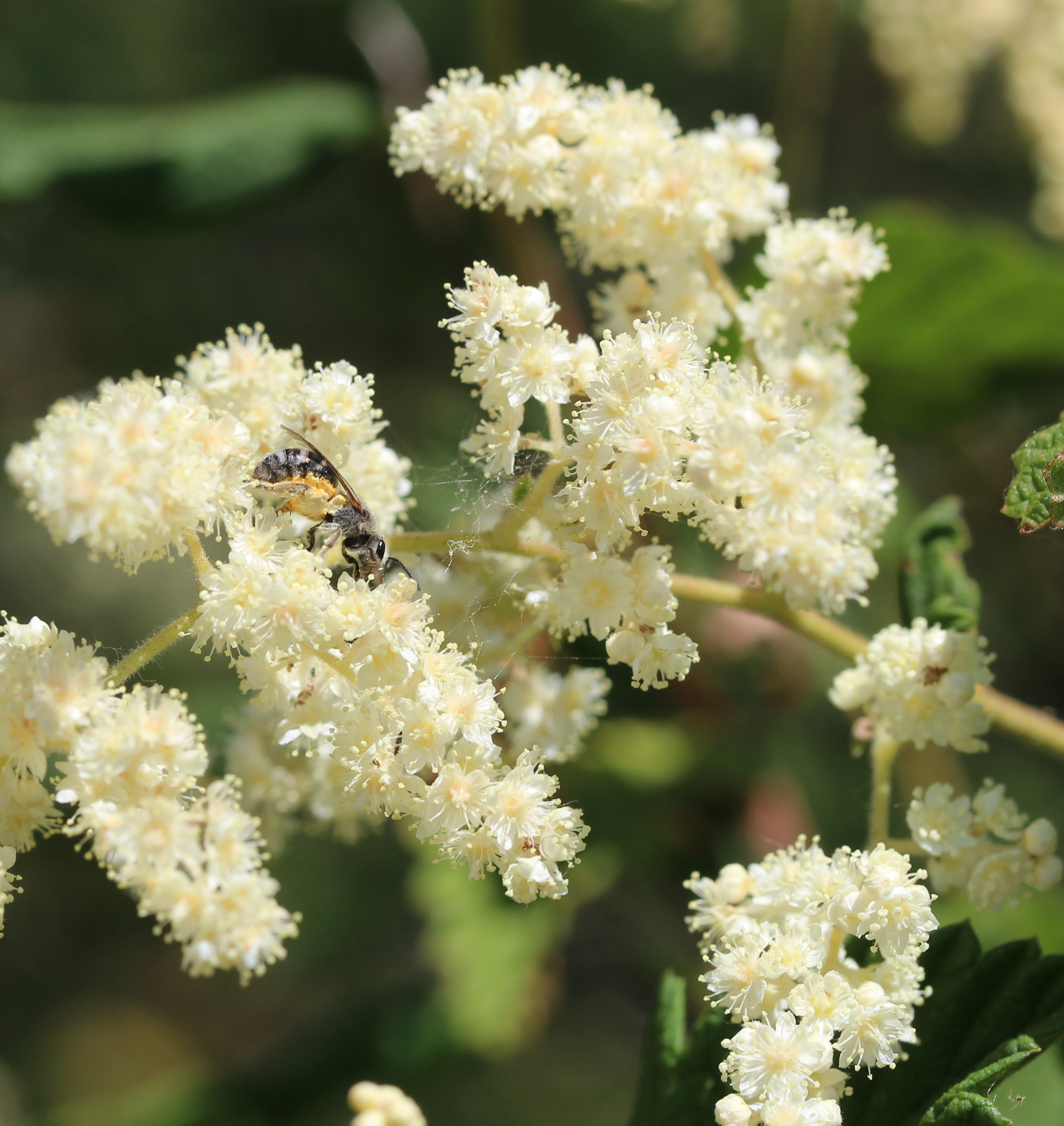
A male leafcutter bee has been patrolling the patch near the door of the  PE building on the Okanagan College campus.  He's been knocking the honey bees right out of the flowers. Occasionally he stops for a rest. It took me two days of stalking him with my camera to finally get a few photos of "his nibs".


 The female of this same species has been nectaring on these plants. She's got such beautiful orange scopa on the underside of her abdomen.


The swallowtail butterflies are attracted to the nectar, and will take their time refuelling on the blossoms. I happened to capture photos of one with bright red pollen on its wings and body. My friend Amy suggested it may be horse chestnut pollen.


There are also tiny Heriades resin bees accessing the nectar. Although the flowers are open access for nectar, only certain insects, such as long-horned bees, can actually move the pollinia by getting them hooked on their legs.

To my delight, a monarch butterfly appeared on the milkweed plants in the native plant garden on campus. It was a short visit, and I didn't get too many photos but I hope she laid some eggs!


There's a lot of woolly lamb's ear planted in the garden around the PE building. The female leafcutter has also been nectaring on that plant and the lavender, both non native plants.

The lamb's ear has attracted a number of non native wool carder bees that have been entertaining us with their antics, particularly the males patrolling flowers and being bee thugs. The milkweed has more value here as a native plant that supports many native bees and butterflies. I'm excited about trying to do some cyanotype photos made from negatives of some of these milkweed images.


Sunday, June 4, 2023

Pressing Matters


I'm getting some plants ready for a cyanotype workshop with the folks at hcma Architecture and Design in Victoria. First I'm pressing them between sheets of paper towel to get some of the moisture out, then I'm putting them between pages of magazines to squeeze them flat. This is Stoechas lavender and thyme.


It's good to have some heavy books around to add weight to the squeeze.


Cyanotypes works so well with plant details, especially translucent materials like petals. However, it's best to press the plants flat first so the outline with be sharp. You can also lay a piece of plexi or glass on top to help it stay flat, especially if there is a slight breeze.


After you've done an initial pressing you can check the leaves to make sure they are laying the way you want to present them.


The history of cyanotypes is quite fascinating. One of the first uses of the process was to document types of seaweed by Anna Atkins.

If you are on Pinterest, I have been collecting images of different ways they can be used: https://www.pinterest.ca/beespeaker/cyanotype/

I've very excited to have to space and time to create some fabrics with cyanotype prints that can be made into costumes. Stay tuned!


Hungry Eagles and Bees


The invasive Himalayan blackberries are blooming, which means it's time to look for bees carrying that taupe coloured pollen they provide. When you remove invasive plants, it's important to replace them with a collection of the native plants they have likely displaced. So at this time of the year that means hairy honeysuckle, trailing blackberry, oceanspray, sedum and snowberry. At Jack's Point in Nanaimo, these plants will be in full bloom in a few days and there will be a crazy amount of bees on them. There are many worker bumble bees out on Vancouver Island now and a few male bumble bees are also starting to appear. We also witnessed herons and eagles feeding in the bay at low tide.


The oceanspray buds and blossoms are frothy and delicate and when fully opened they attract numerous species of native bees. Andrena mining bees seem to love them.


I was happy to see that hairy honeysuckle has an affinity for climbing arbutus trees. This relationship is beautiful to witness. Long-tonged bees, butterflies and moths love suck the nectar from these tubular flowers. Short tongued bees cheat and bite holes in the corollas. I was also excited to see Sedum spathulifolium blooming at the base of some arbutus trees. It makes a fabulous drought tolerant ground cover and bees love the bright yellow flowers.


As the snowberry blossoms appear, the hum of the forest edge increases in volume as all sizes of bees drink the sweet nectar.


This is also a great year for Rocky Mountain clearwing moths which lay their eggs on snowberry shrubs.


There is still a bit of shortspur seablush in bloom, which is also a favourite of Rocky Mountain clearwing moths and bees.

The tiny shiny Ceratina carpenter bees seem  like the right size to feed on these hooker's onions, which are one of the most beautiful allium species I have ever seen.


There were also a few flowers I'm not familiar with--excited to get to know them!

This yarrow was also blooming, with very silvery hairy leaves.


 I was thrilled to see this bee mimic robber fly (Laphria fernaldi). It's difficult to see, but it was carrying another insect as its prey.


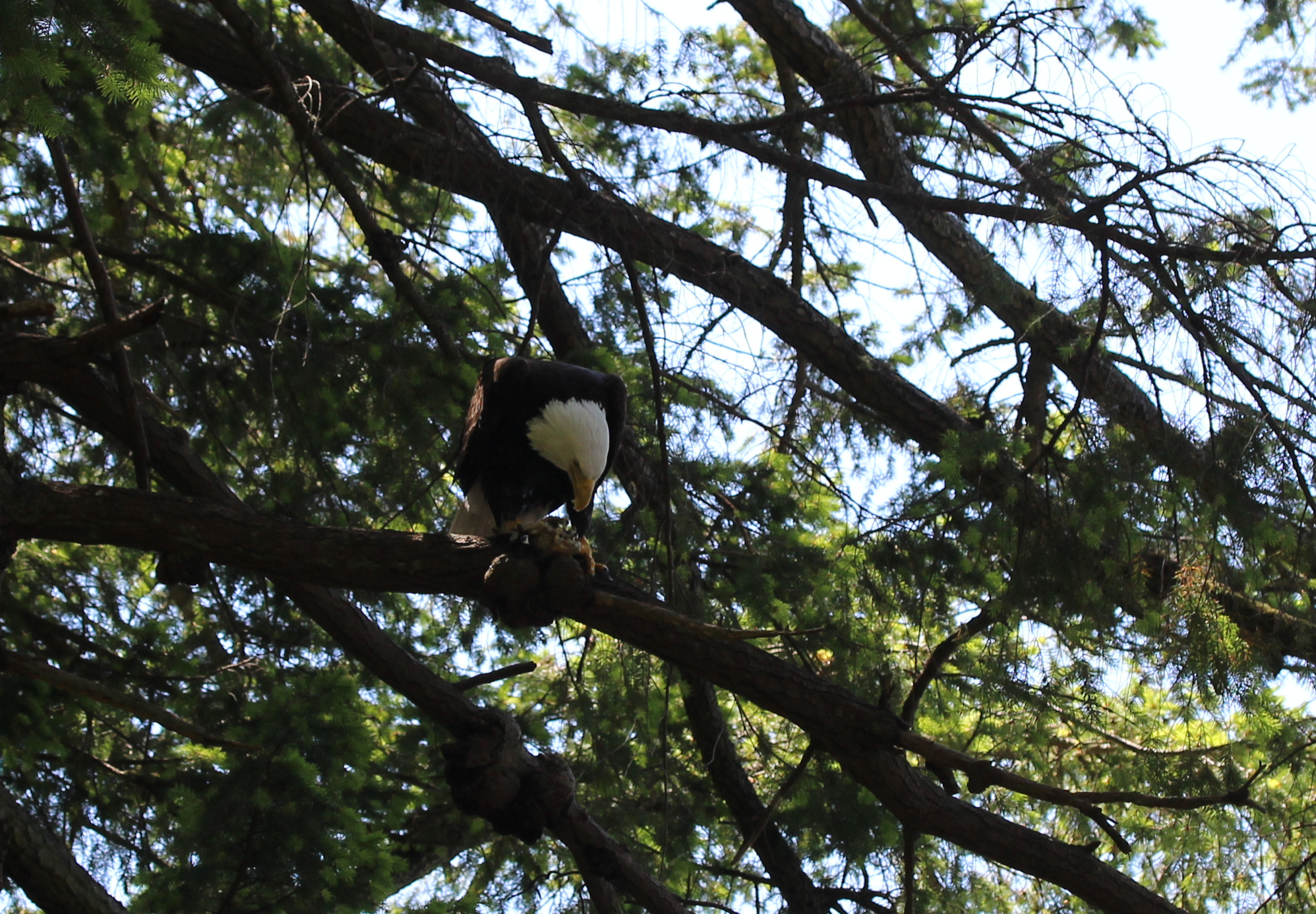
We were really lucky to witness an eagle munching on a large crab. I can attest it was a messy eater! Bits of crab fell onto the forest floor to feed scavengers and add compost to the rich soil.


Darren counted 25 herons feeding in the bay at low tide. It was such a beautiful day to go bee and bird watching at Jack Point. I feel so much gratitude to witness such spectacular beauty.

Thursday, June 1, 2023

Contemplating the Spirea


What a pleasure it was to meet some of the staff at hcma in Victoria and take them on  a tour of the native plant garden at the Royal BC Museum. There are an incredible number of plants here that are great for supporting native bees, including this lovely spirea, which is covered with stamens that the bees love to scramble over to collect pollen.

Here are some resources to learn more about how the garden is structured, and some of the plants it contains. This is an example of how landscape architecture can be regenerative and restorative, putting back some of the plants that were removed when the city was developed. Many of these plants are culturally significant to local First Nations.

https://royalbcmuseum.bc.ca/visit/exhibitions/native-plant-garden


https://staff.royalbcmuseum.bc.ca/2021/04/21/royal-bc-museum-native-plant-garden/


https://royalbcmuseum.bc.ca/sites/default/files/sites/default/files/images/FINAL_Native_Plant_Garden_Brochure.pdf


For more info on native plants that are edible for humans and bees, The Galiano Island Conservancy has created a fabulous set of resources, including a N'uts'a'maat ' foraging guide you can download from their web site.


 Getting outside and watching the bees together was wonderful. I really wish we had more time to do this!


I also assembled a "menditation station" at the hcma office in Bastian Square. The idea is that staff can use these resources to copy the process I am doing with the arbutus leaves made of cloth, or create their own contemplative rituals to deal with climate change anxiety. They can use a quiet corner of the office, or take some materials home.


I also provided some seeds for folks who wanted to grow flowers for bees and some resources on learning more about BC native bees.


I bought some fabric at thrift stores that people can use, or they can bring their own fabrics and even make leaf-shaped patches to mend their own clothes.


There are also art materials you can use to explore the questions: What do you see that needs mending/restoring in your life? What are some steps you can take to heal and mend these things? This is meant to be a playful meditative space to doodle, write, draw, and become grounded in the ideas of restorative design and architecture. Why not create your own "menditation station at home?" Have fun!